How Does the Clutch Work? Everything You Need to Know
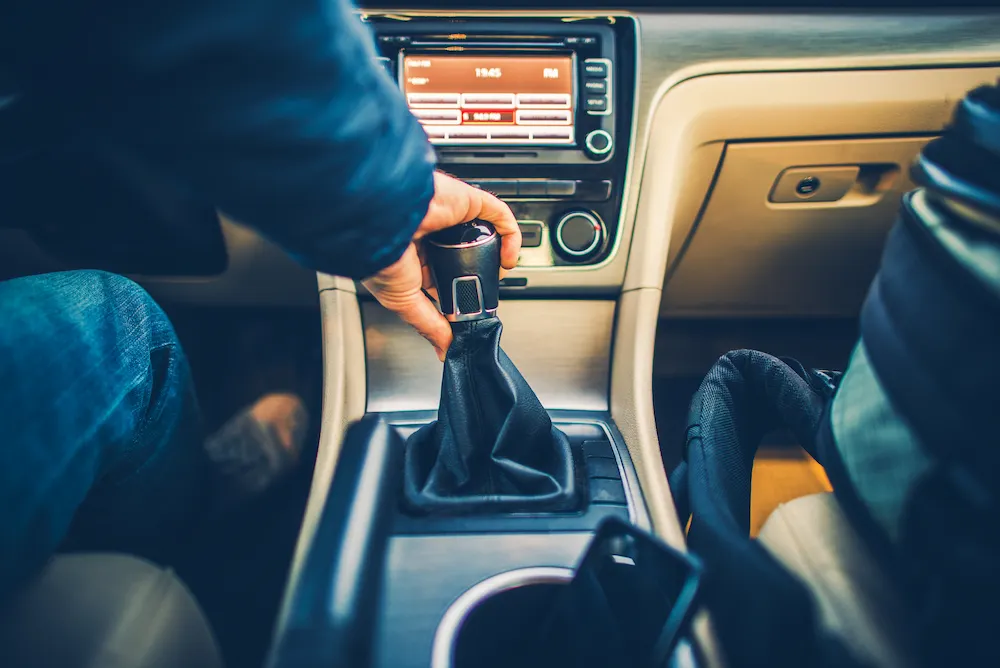
When you take lessons in a manual car, the clutch is always one of the parts you have to get used to as a beginning driver. If you master the clutch, you can often drive smoothly without the car stalling and you can drive away without jerking. If you drive in the car more often, this becomes automatic and you don’t have to think about it at all anymore. In this blog we’ll tell you everything you need to know about the clutch, so you can make a good start with your practical and theory exam.
Difference between a manual car and an automatic
You can choose to take driving lessons in an automatic or in a manual car. When you take lessons in an automatic, you may only drive in an automatic after obtaining your license. When obtaining a license in a manual car, you have more freedom. The advantage of this is that you may drive in all vehicles, both in a manual car and in an automatic. The difference between the two lies in the clutch, so the shifting. In a manual car you shift yourself between the different gears. With the automatic, the car does this automatically for you, hence the name automatic. In the automatic you therefore won’t find a gear lever and clutch pedal.
How a clutch works
To shift in a car you use a gear lever and a clutch pedal. The clutch pedal is on the left side in the car. The clutch is actually the connection point between the engine and the drive of the wheels. By pressing the clutch with your left foot, you ensure that the connection between the engine and the wheels is temporarily broken. This way you can change gears and come to a stop without the engine having to be turned off. Understanding the clutch is handy for your practical but also theory exam. Questions about the clutch can occur in the vehicle control section.
Common mistakes
There are a number of mistakes that are often made with the clutch, which can cause you not to drive smoothly or cause wear. Releasing the clutch too early is one of these mistakes, which results in the car stalling. In addition, people sometimes forget to press the clutch when braking, which can cause the car to stutter or cause you to come to a jerky stop. Giving gas without releasing the clutch causes you not to move forward. There’s then no connection between the engine and the wheels, so the car just stays still. To prevent wear, it’s good to know that you shouldn’t rest your foot on the clutch for a red traffic light. Finally, you should try not to look too much at the clutch or the gear lever while driving, so you don’t see what’s happening in traffic, while traffic awareness is enormously important. When you master this, it will of course be much easier.
How do you ensure you can shift smoothly
The most important thing is that you get to know the car you’re driving in well. This way you learn exactly where the engagement point of the clutch lies. An important tip is that you should always let the clutch come up calmly. So don’t be too hasty and feel the car.
You can practice this, for example, on an empty parking lot. Shifting should often be between 2000 and 2500 rpm for a gasoline car and between 1500 and 2000 for a diesel. This rpm is related to how fast you’re driving and thus which gear you should use. This can differ per car, but you often feel when you need to shift. When you take your theory exam, it’s handy to know something about the clutch. A question can, for example, be about what you should do with the clutch if you want to shift to a higher gear or when you use the clutch when braking. Want to practice with this already? On our site you’ll find practice questions that you can do to prepare yourself as well as possible.