Top 8 Danger Signs to Know
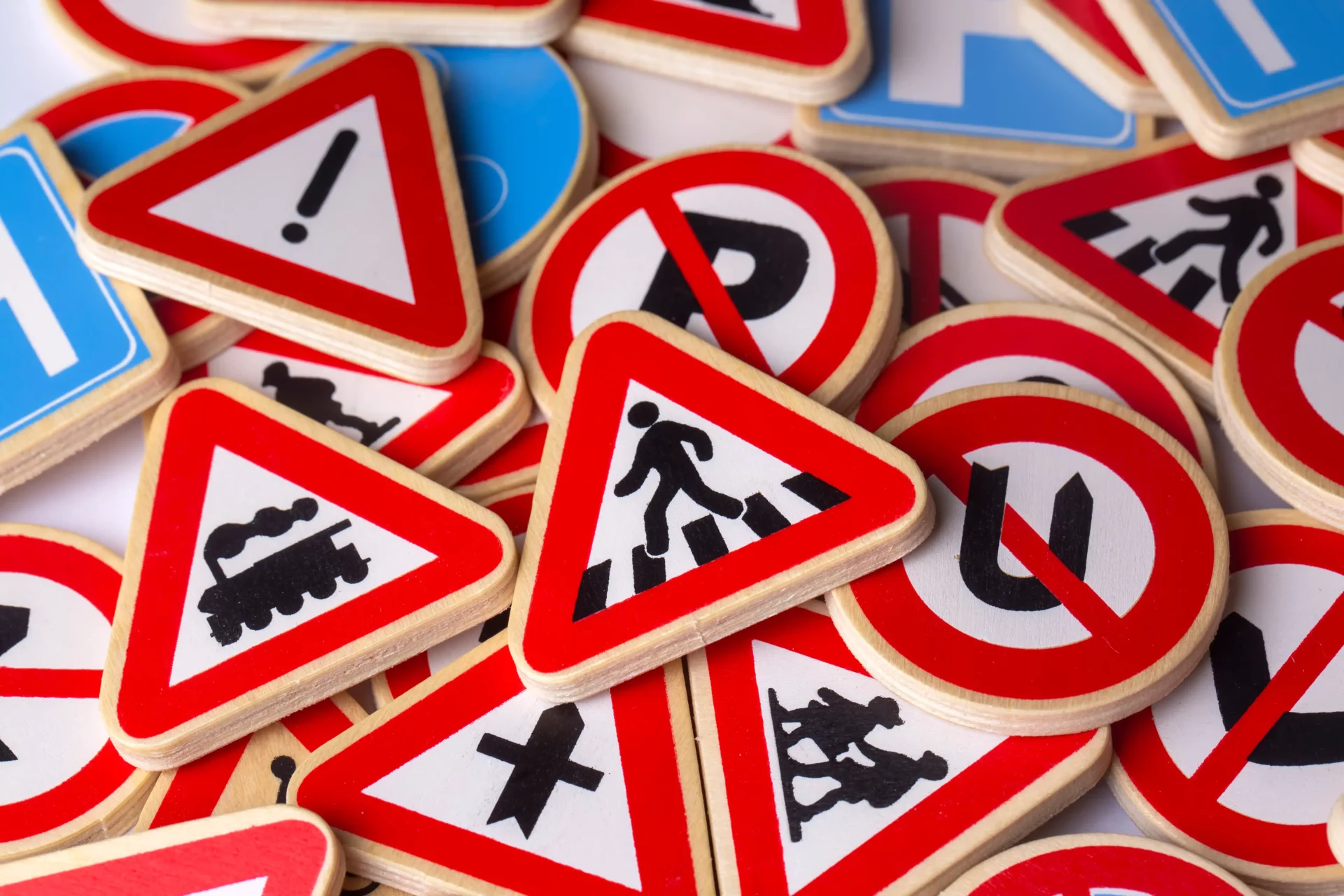
The most common danger signs
Danger signs have a very recognizable shape. The signs look like a white triangle with a thick red border. These signs are placed 150 meters (unless otherwise indicated) before the relevant “danger”. This way you know as a road user that you then need to pay extra attention. A danger sign also tells you what the reason for the danger is, and what you then need to pay extra attention to. To help you with this, we’ve written this blog. If you want to practice with traffic signs, it’s good to recognize these signs. That’s why we discuss the most common danger signs here.
1. A1: Dangerous bend
You’ll see these signs very often on country roads, and the sign means that you need to pay extra attention to the upcoming bend. These signs sometimes have a double pattern (A1c & A1d). This means that there’s a double bend coming, which makes it smart to adjust your speed.
- A3 and A5: Dangerous descent/ slope
With a descent, the braking distance is longer than normal. So take this into account and try to reduce speed in time. The opposite sign of the A3 sign is the A5 sign: dangerous slope. With these signs, the degree of slope is shown by the percentage you see on the sign.
- A7: Road narrowing
These signs occur when the road narrows. Here there are variants where the road narrows on the right, left or both sides. With this sign, it’s especially important that you’re prepared to swerve.
- A15: Slippery road
Some places often have slippery roads, which is why this sign has a fixed place. And there can, for example, be roadworks that make the road slippery and this sign is temporarily placed. Either way, with this sign you want to reduce speed. Often you read under the sign an explanatory reason why the road is slippery.
- A21: Pedestrian crossing
The A21 sign means that there’s a pedestrian crossing coming. You also have the sign (A25) that indicates a crossing for cyclists and mopeds. At a marked crossing, you’re required to give right of way to road users who want to cross the road at a crossing.
- A23: Place where especially many children come
If you see this sign, you’re probably near a residential area or school. Either way, there are often children on the road here and children can come unexpectedly from around the corner. Children can play on the road, suddenly cross, or they can be difficult to see because children are smaller.
- A31: Roadworks
Watch out! There are roadworks going on. This sign usually doesn’t have a fixed location, but with the high amount of roadworks, you’ll often encounter this sign. You drive here attentively and you adjust your speed. Furthermore, you try to be extra prepared for changes in the traffic situation.
- A51: General danger
If there’s a danger that can’t be well explained with another sign, then this sign comes in handy. This sign is used for every possible danger for which there isn’t a sign yet. The text under the sign often explains where the danger comes from. So also pay attention to the sub-sign, this sign gives important information about what exactly is going on. Common sub-signs you encounter in combination with this sign are: unpaved verge, bad road surface, falling stones.
Practicing with traffic signs
These are a number of the most common danger signs you encounter in Belgium. But this list is not yet complete! For your theory about traffic signs, it’s important to know all danger signs. Want to practice the danger signs extensively? Then try this package so you’re well prepared for the exam!